1–3 Day Approval for Private Owners: Home Equity Limits in Singapore

Yes, eligible Singapore private property owners can tap equity through a Mortgage Equity Withdrawal Loan (MWL) or a cash-out refinance, and Executive Condominium owners can join them once they clear the five-year Minimum Occupation Period. Loan-to-value limits and your existing mortgage balance decide how much is actually available, and the property itself sits as collateral, so a missed repayment carries real consequences. Start by estimating your equity and comparing quotes before you commit to either route.
TL;DR:
- Borrowing limits are capped at 75% loan-to-value for first-time applicants and 45% if you have existing residential loans, with a maximum term of 35 years.
- Your available equity is further reduced by CPF accrued interest and existing mortgage balances, often leaving less financing than expected.
- Costs include valuation, legal, and administrative fees, while interest rates can be fixed or floating, with total fees and reset frequency affecting true borrowing costs.
- The application process involves valuation, document submission, and credit checks, typically taking a few weeks, with delays caused by incomplete paperwork or TDSR breaches.
- Using a broker to apply across multiple lenders can reduce approval time to one to three days, but accurate initial equity calculation is essential for a successful application.
Table of Contents
- What "Home Equity Loan Singapore" Actually Means Here
- How Much Equity Can You Actually Withdraw?
- What Will It Cost You, and How Do You Compare Offers?
- How Do You Apply, and What Slows Approval Down?
- Should You Tap Your Equity, or Think Twice?
- How a Broker Speeds Up Approval on a Complex Application
- The Real Gap Between MAS Rules and What Homeowners Actually Do
- Ready to Check What You Actually Qualify For?
- Where to Verify the Rules Yourself
- Sources
What "Home Equity Loan Singapore" Actually Means Here
Singapore doesn't really have a "second mortgage" market the way the US or UK does. Ask a local bank officer for one and they'll usually steer you toward one of two products instead: a Mortgage Equity Withdrawal Loan or a refinance with cash out. Understanding the difference up front saves you a lot of wasted phone calls.
An MWL is a secured loan taken against a private property or an MOP-cleared EC, structured separately from your existing home loan. You keep the property, keep living in it, and borrow against the equity you've built. Citibank's own explainer frames it exactly this way: retain ownership, use the home's value as leverage.
Cash-out refinancing works differently. Instead of layering a new facility on top of your current mortgage, you replace the whole loan with a bigger one from the same bank or a different one, pocketing the difference in cash. Consumer guides in Singapore note that banks actually prefer this route over carrying a junior lien, which is one reason true second mortgages barely exist in local retail banking.
A few quick pairings to help you choose:
- Pick MWL or a separate secured facility if: your current mortgage rate is good and you don't want to disturb it, or your existing loan is close to being paid off.
- Pick cash-out refinance if: rates have dropped since you took your original loan, or you'd rather deal with one loan and one repayment schedule instead of two.
- Skip both and look at unsecured options if: you need a small amount and don't want your home on the line for it.
Non-bank finance companies occasionally offer niche caveat or second-charge loans at steeper rates. Treat those as a last resort, not a first stop.
How Much Equity Can You Actually Withdraw?
MAS sets the ceiling, and it's stricter than most first-time applicants expect. The Mortgage Equity Withdrawal Loan Rules cap borrowing at 75% loan-to-value if you have no other outstanding residential housing loans, dropping to 45% if you're already carrying one or more. Tenure on an MWL tops out at 35 years regardless of which bracket you fall into.
By the numbers: 75% LTV with no other residential loans, 45% LTV with one or more, 35-year maximum tenure.
Your available equity isn't just "property value minus loan balance," either. Two things quietly eat into it:
- CPF monies used on the property, including accrued interest, get subtracted before the bank calculates what's left for you.
- Outstanding mortgage balances on the same property, obviously, reduce the pool further.
Homeowners are routinely surprised by how much smaller their real number is once CPF accrued interest comes off the top.
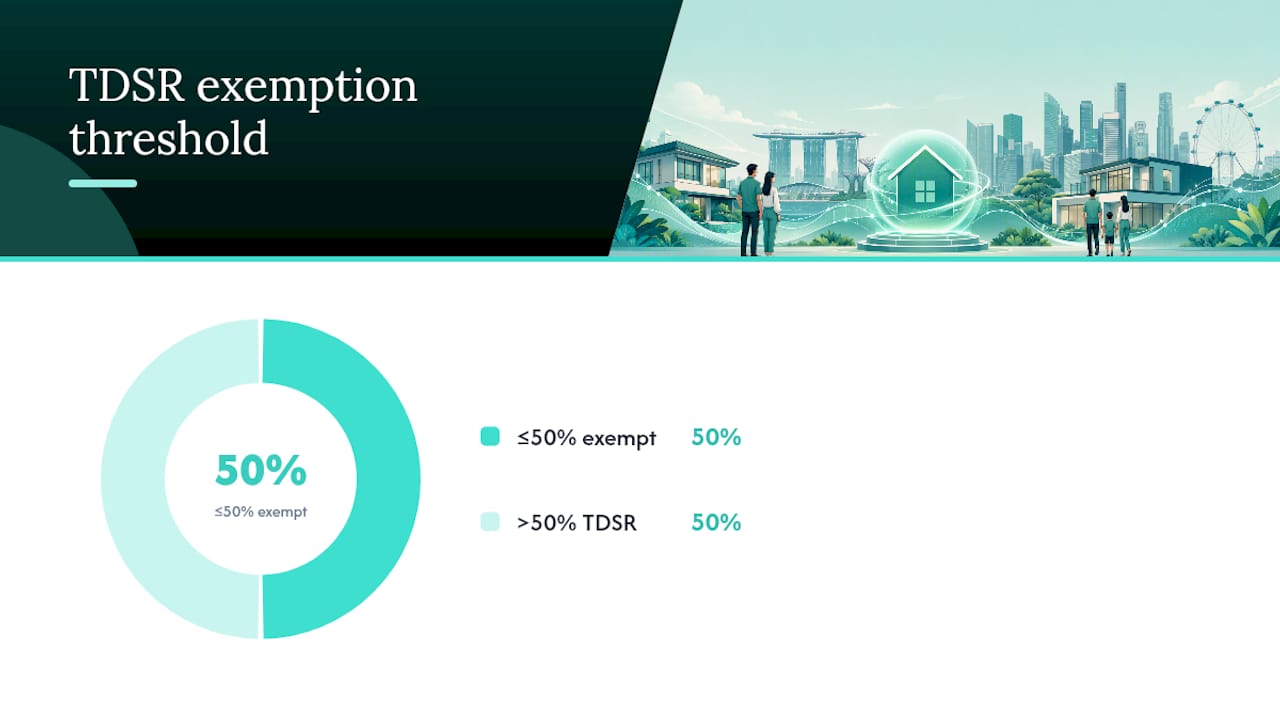
There's a useful exemption worth knowing: if your MWL combined with other property loans stays at or below 50% of the property's value, the Total Debt Servicing Ratio framework doesn't apply to that MWL. Above that threshold, TDSR kicks in and your income, age, and existing debts all get weighed.
HDB flats are excluded from MWL entirely, and ECs are locked out until MOP passes. Get your property professionally valued, or check IRAS's valuation and calculator tools, before you assume a number and start planning around it.
What Will It Cost You, and How Do You Compare Offers?
Every equity loan or refinance carries upfront costs beyond the interest rate. Budget for a professional valuation fee, legal conveyancing fees, and administrative charges from the bank, which together typically run into the low thousands of dollars depending on property value and law firm rates.

Interest pricing splits into two camps. Fixed-rate packages lock your rate for a set period, giving you certainty but usually at a slight premium. Floating packages track SORA, and UOB's property equity financing page shows how banks bundle promotional SORA-linked spreads that look attractive on paper but shift with the market over your loan's life.
Repayment structure matters too. Most MWLs and refinances run on standard principal-and-interest schedules, though some banks offer interest-only periods for specific circumstances, usually short-term and reviewed case by case.
Before signing anything, run through this checklist:
- Effective interest rate, not just the advertised spread over SORA
- Total fees: valuation, legal, admin, and any early-repayment or lock-in penalties
- Loan tenure and how it affects total interest paid
- Whether the rate resets and how often
Pro Tip: Ask each bank for the effective interest rate on a like-for-like tenure and loan amount. The headline spread almost never tells the full story once fees and reset frequency are factored in.
How Do You Apply, and What Slows Approval Down?
The process runs in a fairly fixed sequence, though the timeline varies by bank and how complete your paperwork is.
- Check eligibility against LTV caps and confirm your property type qualifies.
- Get a valuation done, either bank-appointed or through an independent licensed valuer.
- Submit documents, including income proof, CPF statements, the property title deed, and existing loan statements.
- Bank underwriting, where TDSR and credit checks happen if applicable.
- Legal completion, handled by a conveyancing lawyer.
- Disbursement of funds once everything clears.
Most straightforward applications take a few weeks from submission to payout. Incomplete documents, unclear income sources, or a property still under an existing loan dispute are the usual culprits behind delays.
The most common rejection reasons: TDSR breaches, inconsistent income documentation, and outstanding CPF or loan balances that leave less equity than the applicant assumed. Pre-empt all three by running your own numbers before you apply, not after.
Should You Tap Your Equity, or Think Twice?
Used well, home equity can be one of the cheaper forms of borrowing available to you, because it's secured against a property rather than your income alone. Debt consolidation, business capital, or a renovation that genuinely raises the property's value are the strongest cases for it.
- Paying off multiple high-interest unsecured debts with one lower secured rate
- Funding business expansion when the numbers support the return
- Renovation work with a clear payback in resale or rental value
The risks are just as real. Your home is collateral, so default risk means repossession, not just a dinged credit file. Legal costs and long-term equity erosion are worth weighing against whatever short-term relief the cash provides.
Before proceeding, ask yourself: can you afford repayments if income drops? Have you checked alternatives like unsecured loans first? Does the expected return justify the risk? What's your exit plan if circumstances change?
Pro Tip: Don't withdraw equity to cover a shortfall you can't clearly trace back to a repayment plan. "It'll work out" is not an exit strategy.
How a Broker Speeds Up Approval on a Complex Application
Bank underwriting for MWLs and refinances isn't one-size-fits-all. Every lender weighs income documentation, TDSR exposure, and property valuation slightly differently, and a mismatch between your profile and one bank's criteria is exactly what causes rejections and rework.

Kapvoy compares over 30 banks and lenders and submits eligible applications across multiple institutions at once, rather than betting everything on a single bank's appetite. That parallel approach, paired with fee-on-success pricing charged only after funding clears, gives clients an average approval turnaround of one to three days.
What clients typically provide upfront:
- Income proof and CPF statements
- Property title deed and existing loan statements
- Basic details on the intended use of funds
The documentation load is the same as applying directly. What changes is having someone match your file to the right lender the first time.
The Real Gap Between MAS Rules and What Homeowners Actually Do
Most guides to home equity in Singapore stop at reciting MAS's LTV table and calling it a day. What actually determines whether your application succeeds is the CPF accrued interest calculation that almost nobody budgets for, and the TDSR exemption threshold that most owners don't realize exists until a loan officer mentions it halfway through underwriting.
Conventional advice treats refinancing and MWL as interchangeable "just pick the cheaper rate" decisions. They're not. One resets your entire mortgage; the other leaves your existing rate untouched. Get that choice wrong and you either lose a good legacy rate or end up juggling two separate repayment schedules unnecessarily.
If there's one thing worth prioritizing first, it's running your own equity math, including CPF withdrawals, before you talk to any bank. Walking in with a realistic number, rather than a guess based on your last valuation, is what separates a smooth application from a rejected one. A broker can speed up the matching process, but no broker can fix a fundamentally miscalculated equity position before you start.
— Viknesh
Ready to Check What You Actually Qualify For?
Kapvoy exists for exactly the moment you're at now: you've done the math, you understand the LTV caps, and you want to know which of 30-plus lenders will actually approve your profile without months of back-and-forth. Instead of applying to one bank and waiting to find out whether you fit their criteria, Kapvoy submits your case across multiple lenders at once, which is why average approval sits at one to three days.

There's no upfront fee and no consultation charge. Kapvoy only gets paid once your financing is approved and disbursed, so the incentive is aligned with getting you funded, not just getting you in the door. If you're weighing an equity release against other property financing routes, the property financing guide walks through the options side by side. Ready to see what you qualify for? Check your eligibility in three minutes and get a clear answer instead of another rate quote to compare.
Where to Verify the Rules Yourself
For LTV caps, tenure limits, and TDSR interactions, go straight to MAS's Mortgage Equity Withdrawal Loan rules, the primary source every bank underwrites against. For property valuation estimates, IRAS's calculator tools offer a useful starting point before you commission a formal valuation. Bank pages like UOB's property equity financing product page are worth checking directly for current rate packages, and independent explainers such as Haio add a practical secondary read on how these products work in practice.
This article is general information, not a substitute for advice from a qualified financial advisor. Consult a qualified financial professional about your own circumstances before acting on anything here.
Sources
- Mortgage Equity Withdrawal Loan Rules
- Everything you need to know about home equity loans in Singapore | Citibank
- Home Equity Loan Singapore: Cash Out & Refinance Guide — MoneySmart
- Property equity financing | UOB Singapore