Secured vs Unsecured Loan: What Actually Sets Them Apart

A secured loan uses collateral and usually costs less. An unsecured loan skips the collateral but usually costs more. The choice comes down to how much risk to your assets you're willing to accept in exchange for a cheaper rate.
That's the entire trade-off in one sentence, but the details decide whether it's the right trade for you. MoneySense and Investopedia both frame the split the same way: collateral versus creditworthiness. Here's what that means in practice.
- Secured loan: backed by an asset (property, equipment, inventory) the lender can seize if you default.
- Unsecured loan: backed only by your credit history and income, no asset pledged.
- The real question: would you rather pay less and risk an asset, or pay more and risk nothing but your credit score?
If you're weighing options and want a faster path to a decision, a broker like Kapvoy can match your profile against multiple lenders at once instead of you guessing which one fits.
Key Takeaways
The right loan type depends on whether you'd rather pay less and risk an asset or pay more and keep your assets untouched.
| Point | Details | | --- | --- | | Collateral drives the price gap | Secured loans use property or equipment as backup, which typically lowers rates and raises limits. | | Speed favors unsecured loans | Appraisals and legal checks slow secured approval, which typically takes longer; unsecured loans often close faster. | | Personal guarantees can hide risk | Even secured business loans may require a personal guarantee, exposing personal assets too. | | Match the loan to the purpose | Large, long-term needs suit secured financing; short-term working capital often fits unsecured products. | | Kapvoy speeds up the comparison | Kapvoy matches borrowers to 30+ lenders at once, charges only on successful funding, and averages 1 to 3 day approvals. |
Table of Contents
- Secured vs Unsecured Loan at a Glance
- How Do Secured and Unsecured Loans Actually Work?
- What Do Secured and Unsecured Loans Cost?
- How Fast Can You Get Approved?
- Pros, Cons, and the Risks Worth Weighing
- Which Loan Type Actually Fits Your Situation?
- How a Financing Broker Improves Your Odds
- Sources
Secured vs Unsecured Loan at a Glance
Before you dig into mechanics, here's the short version.
- Collateral: required for secured loans (property, equipment, receivables); none for unsecured loans.
- Interest rates: secured loans typically run lower because the lender has an asset as a backstop; unsecured loans price in the added risk with higher rates.
- Borrowing limits: secured loans generally allow larger amounts tied to the asset's value; unsecured loans cap lower, tied to income and credit strength.
- Approval speed: unsecured loans move faster (days) since there's no appraisal; secured loans take longer because of valuation and legal checks.
- Common examples: secured includes mortgages, equipment loans, and asset-backed SME financing; unsecured includes personal loans, credit cards, and personal lines of credit (PLOC).
Everything else in this guide expands on those five lines.
How Do Secured and Unsecured Loans Actually Work?
A secured loan starts with a lien: the lender registers a legal claim on a specific asset until the debt is paid off. Miss enough payments, and the lender can repossess or force a sale of that asset to recover its money. That's the mechanism behind lower rates. The lender isn't just trusting your promise to repay; it has a fallback.

Unsecured loans skip that step entirely. The lender is relying on your credit profile, income, and repayment history. No lien means no direct asset at risk, but it also means the lender charges more to offset that exposure.
Personal guarantees complicate this picture. Even when a business borrows against collateral, lenders often still ask the business owner to personally guarantee the debt, especially if the company's own credit profile is thin. That means your personal assets can stay exposed even on a "secured" business loan, a detail many borrowers miss until something goes wrong.
- Mortgage — secured against the property itself.
- Equipment loan — secured against the machinery or vehicle purchased.
- Personal loan — unsecured, based on income and credit score.
- Personal line of credit (PLOC) — unsecured, revolving credit you draw against as needed rather than a lump sum.
Product names and exact terms vary by market, and Singapore's own MoneySense distinguishes term loans from revolving credit for this exact reason.
Pro Tip: Read the personal guarantee clause before you sign anything, not after. If a "secured" business loan still asks you to guarantee it personally, you're carrying two layers of risk, not one.
What Do Secured and Unsecured Loans Cost?
Rates diverge because risk diverges. A lender holding a lien on your property or equipment has recourse if things go wrong, so it can afford to price the loan lower and lend a larger amount against that asset's value. Investopedia notes secured loans generally carry lower interest rates and higher borrowing limits, while unsecured loans trade speed for a higher cost.
Unsecured products compensate for that added risk two ways: higher interest rates and shorter repayment terms. A personal loan or business line of credit rarely stretches for decades the way a mortgage does.
Fees differ too. Secured loans often carry costs unsecured ones don't:
- Property or equipment valuation fees
- Legal fees for registering the lien
- Arrangement or facility fees
- Early repayment penalties, more common on secured, longer-term debt
Forbes points out that unsecured options like lines of credit and merchant cash advances can bridge short-term gaps, but often at a higher effective cost once you total the APR against a comparable secured alternative.
How Fast Can You Get Approved?
Timelines split almost as sharply as rates do. Unsecured loans typically close in days because the lender is checking credit history and income documents, nothing more.
Secured loans take longer, sometimes weeks, because of what has to happen before approval:
- Asset appraisal — a licensed valuer inspects the property or equipment, and specialized commercial assets often need repeat inspections if paperwork is incomplete, adding multiple business days to the timeline.
- Proof of ownership and legal checks — title searches, lien registration, and sometimes insurance verification.
- Credit and income review — the same checks an unsecured application requires, run in parallel.
Submitting to one lender at a time compounds the delay if that lender's underwriting criteria don't quite fit your profile. Working with a broker that submits your application to several lenders simultaneously, matched to their specific requirements, shortens the path considerably compared to applying, waiting, and reapplying elsewhere.
Pros, Cons, and the Risks Worth Weighing
Secured loans win on cost and size but put something real on the line.
- Secured pros: lower interest rates, higher borrowing limits, longer repayment terms.
- Secured cons: the pledged asset is at risk, and cross-collateralizing multiple loans against the same asset can trap you if one facility defaults.
- Unsecured pros: no asset directly at risk, faster approval, simpler paperwork.
- Unsecured cons: higher rates, smaller limits, and stricter credit requirements since the lender has nothing to fall back on.
Default consequences differ beyond repossession, too. Missing payments on a secured loan usually means the lender moves to seize the asset. Default on an unsecured loan skips repossession but can still lead to collection actions, a lawsuit for the outstanding balance, and a court judgment against you, alongside the credit score damage both loan types inflict when payments are missed.
Pro Tip: Watch for vague fee schedules and balloon payments buried in the fine print. A loan that looks cheaper monthly but back-loads a lump sum at the end can cost you more than the "expensive" unsecured option you passed on.
Which Loan Type Actually Fits Your Situation?
Run through these questions before you apply anywhere:
- How much do you need, and for how long? Larger, long-term needs tend to favor secured financing; short-term working capital often fits unsecured products better.
- Do you have an asset you're willing and able to pledge? No qualifying asset narrows you toward unsecured options by default.
- How fast do you need the money? Days point toward unsecured; weeks of runway make secured financing workable.
- How strong is your credit profile? Weaker credit makes collateral more valuable as a bargaining chip with lenders.
Three scenarios make this concrete:
Scenario A: An early-stage business with no significant assets and a funding gap to cover payroll. An unsecured line of credit or a startup loan product is the realistic route here, since there's nothing substantial to pledge yet.
Scenario B: An SME that needs new machinery to fulfill a large order. A secured equipment loan, backed by the machinery itself, usually beats an unsecured alternative on both rate and the size of the check the lender will write, and it's worth exploring fixed asset financing built specifically for this.

Scenario C: A homeowner refinancing for a large, long-term commitment. Secured financing almost always makes more sense here. Forbes frames this exact pattern: loan size and purpose, not personal preference, usually decide the answer.
Whichever scenario fits, ask every lender the same four questions: the term, the rate (and whether it's fixed or variable), the full fee schedule, and what recourse they have if you default.
How a Financing Broker Improves Your Odds
Lenders don't all evaluate the same collateral or credit profile the same way. One bank might reject an application another approves within days, simply because their risk appetite for your industry or asset type differs. That's the gap a broker is built to close by matching your specific profile to the lenders most likely to say yes, then submitting to several at once instead of one at a time.
Capital One notes that this kind of matching, paired with removing paperwork friction, measurably improves approval odds for borrowers who've been rejected before or who have complex profiles.
Kapvoy compares more than 30 banks and non-bank lenders at once, matching your asset profile and credit history against each lender's actual criteria rather than a generic checklist. The fee, when it applies, is charged only on successful funding, and average approval runs 1 to 3 days once your documents are in order.
- Compares 30+ lenders simultaneously instead of one application at a time
- Charges a fee only when funding is successful, never upfront
- Matches your specific profile (secured or unsecured) to the lenders most likely to approve it
Go the DIY route if you have one clear lender relationship and a straightforward profile. Bring in a broker if you've been rejected before, need speed, or aren't sure which lenders even fit your situation. If you're weighing a mortgage-backed route specifically, resources like this broker versus bank comparison lay out the same logic for property financing.
When You Should Get Professional Help Before Applying
The mistake I see most often is borrowers underestimating appraisal time on a secured loan, then scrambling when the lender asks for a personal guarantee they didn't budget for emotionally or financially. The second most common mistake: never reading the recourse clause until after signing.
My advice is simple. Before you apply anywhere, have your asset valuations, cash-flow statements, and a clear list of what you're actually willing to pledge ready in advance. It saves you weeks.
— Viknesh
Get Matched With the Right Lender Faster
Comparing secured and unsecured options on your own means calling banks one at a time and hoping one says yes before your runway runs out. Kapvoy skips that by submitting your profile to 30+ lenders simultaneously, whether you need a secured equipment loan or an unsecured working capital facility, and matching you to whichever ones actually fit your credit and asset profile.
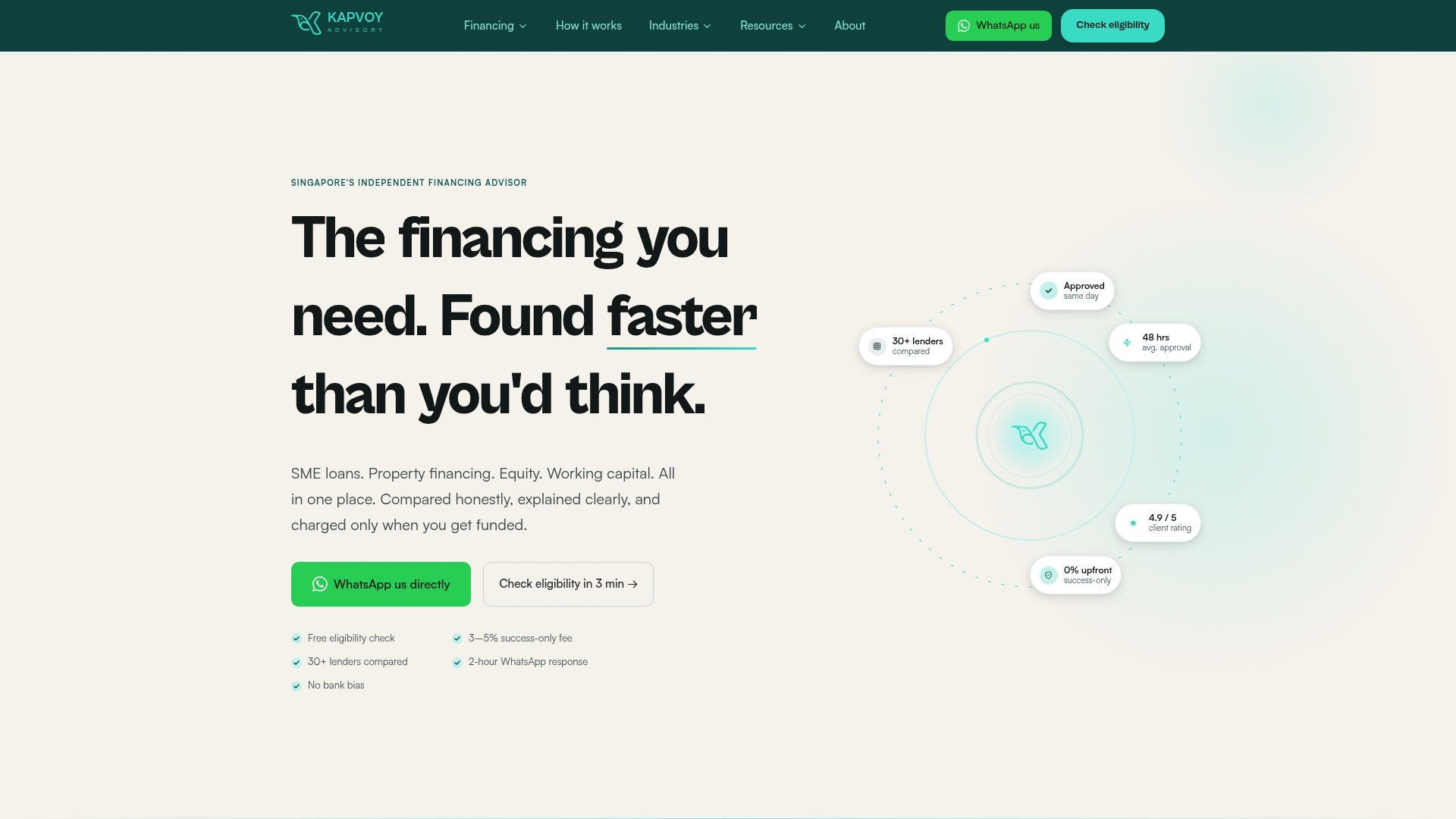
There's no upfront cost or consultation fee. Kapvoy only gets paid when your financing is successfully funded, and many clients see approval in a few days once documents are submitted. If you're ready to see what you qualify for, check your eligibility or browse SME loan options compared to see which structure, secured or unsecured, fits your next move.
Sources
- Understand the types of loans — MoneySense
- Secured vs. Unsecured Loans: What's the Difference? — Investopedia
- Secured vs. Unsecured Business Loans — Capital One
- Before You Borrow: The Smart Small Business Owner’s Guide To Secured Vs. Unsecured Loans — Forbes