Trade Finance Options in Singapore: What Each One Funds
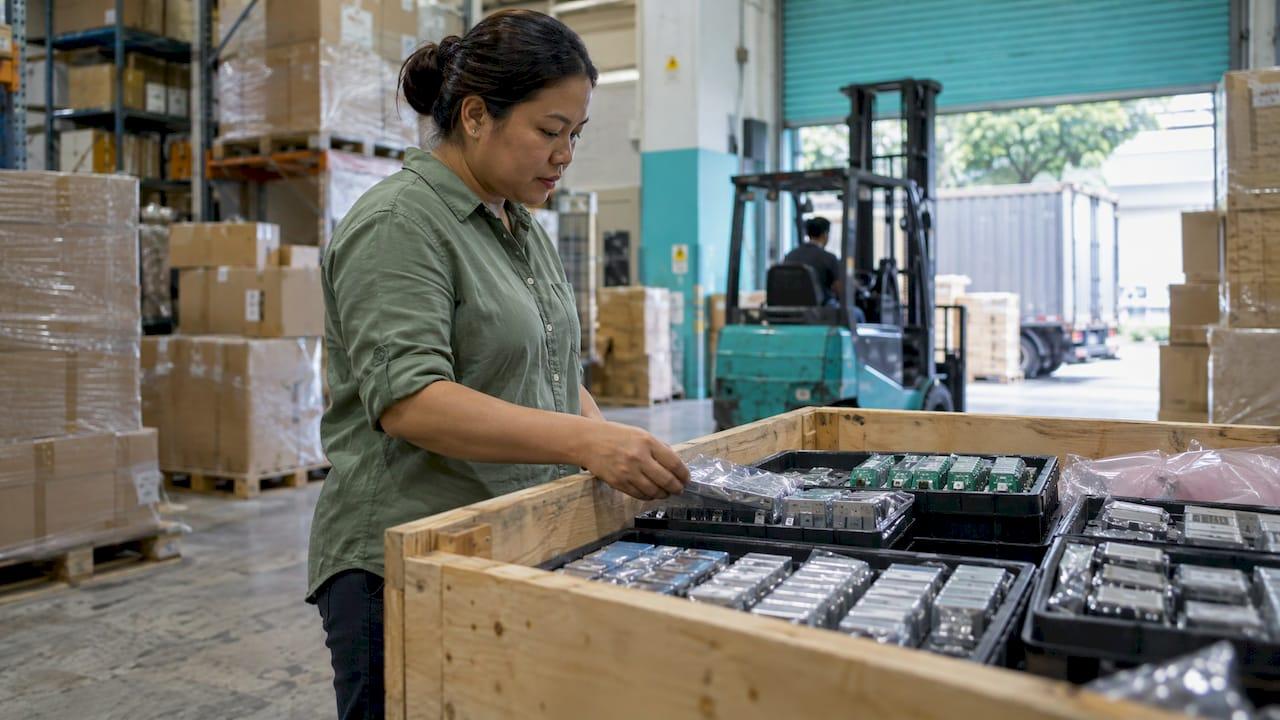
Singapore SMEs have six main trade finance options: trade loans, invoice financing and factoring, letters of credit, bank guarantees, import financing and pre-shipment financing. Each one funds a different gap between paying a supplier and getting paid by a customer. The best fit depends on where your cash is stuck, and the lender who approves you depends on your profile. We compare more than 30 lenders for each application, and our fee is only charged when funding is approved.
TL;DR
- Trade finance covers the gap between paying for goods and receiving payment. The main tools are trade loans, invoice financing, factoring, letters of credit and guarantees.
- The government-backed Enterprise Financing Scheme Trade Loan (EFS-TL) covers inventory, pre-delivery working capital, receivables, overseas working capital and bank guarantees. Repayment is up to 1 year.
- From 1 April 2026, EFS-TL sits under a combined S$50 million cap per borrower group across all EFS facilities.
- Even with the government sharing risk with the lender, you and any guarantors stay liable for 100% of the loan.
- We submit one application to many lenders. Our fee is 3–5% of the approved amount, with no upfront or consultation fees.
Table of Contents
- What trade finance actually does
- The main trade finance options in Singapore
- The EFS Trade Loan, explained for SMEs
- How to choose the right option
- What lenders ask for and what it costs
- Know your liability before you sign
- How to apply, step by step
- Where we fit in
- Our view on trade finance
- FAQ
- Sources
What trade finance actually does
A trade deal has a timing problem. You pay a supplier now, ship goods in weeks and get paid by the buyer 30 to 90 days later. Trade finance fills that gap. Some products give you cash. Others give your supplier or buyer a promise of payment so the deal can go ahead.
Two questions sort your options:
- Where is your cash stuck? It might be in stock you must buy, in goods being made for a confirmed order, or in invoices waiting to be paid.
- Who needs reassurance? Your supplier may want proof you will pay. Your buyer may want proof you will deliver.
The first question points to loans and receivables financing. The second points to letters of credit and guarantees.
The main trade finance options in Singapore
| Option | What it funds or does | Best when | |---|---|---| | Trade loan (inventory or stock financing) | Buying stock or goods for resale | You have a supplier to pay before you can sell | | Pre-delivery working capital | Costs to fulfill a confirmed order or letter of credit | You won a large order and need cash to produce it | | Invoice financing, factoring, bill discounting | Cash against unpaid invoices | Customers pay in 30 to 90 days and you need cash sooner | | Overseas working capital loan | Trade-related working capital for overseas operations | Your trading activity is based outside Singapore | | Letter of credit (LC) | A bank's written promise to pay a seller once documents comply | The buyer and seller do not know each other well | | Bank guarantee or standby LC | A promise of payment if you fail a contract obligation | A customer or landlord wants security |
The next sections cover each option in turn.
Trade loans: stock, orders and receivables
A trade loan is short-term money tied to a specific trade transaction. The Enterprise Singapore scheme page lists what an EFS Trade Loan can finance: inventory or stock financing, structured pre-delivery (revolving) working capital, factoring with recourse, bill of invoice or accounts receivable discounting, overseas working capital loans, and bank guarantees with a tenure of up to 2 years. It covers both domestic and overseas transactions.

If you buy and resell goods, stock financing is the simplest fit. If you hold a confirmed sales order but need to buy materials first, pre-delivery working capital is built for that.
Invoice financing and factoring
Invoice financing releases cash against invoices you have already issued, instead of waiting for the customer to pay. Factoring is a close relative: a financier advances funds against your receivables. It is common for exporters, because overseas buyers often take longer to pay.
Eligibility usually turns on the quality of your debtors, meaning the customers who owe you money. Our guide to invoice financing eligibility in Singapore shows how to fix debtor issues before you apply. If you sell abroad, our practical guide to export factoring covers the export side.
Letters of credit
A letter of credit is a bank's written promise to a seller. If the seller ships goods and presents documents that match the credit's terms, the bank pays up to the agreed amount. For an importer, it gives an overseas supplier the confidence to ship. For an exporter, it replaces the risk of an unknown buyer with the bank's promise. Banks charge fees for issuing, amending and cancelling an LC. These are set in each bank's published tariff, so ask for the schedule before you commit to a structure.
Guarantees and standby letters of credit
A guarantee does not hand you cash. It tells a third party that a bank will pay if you fail to meet a contract obligation, such as delivering goods or completing a project. Under EFS-TL, bank guarantees are one of the eligible products, capped at 2 years' tenure.
Import and pre-shipment financing
Import financing pays your overseas supplier on your behalf and lets you repay once you have sold the goods. Pre-shipment financing gives an exporter working capital before the goods ship. Both usually sit inside a credit facility the lender sets up for you first.
The EFS Trade Loan, explained for SMEs
The EFS Trade Loan is the scheme most Singapore SMEs look at first. In it, Enterprise Singapore (EnterpriseSG, the government agency that supports local businesses) shares default risk with participating financial institutions. This makes lenders more willing to approve trade facilities. The key terms, from the EnterpriseSG scheme page:
- Loan size: a maximum of S$50 million per borrower group, counted across all EFS facilities.
- Repayment: up to 1 year.
- Risk share: 50% from EnterpriseSG, and 70% for young enterprises or challenged markets.
- Interest rate: set by each lender's own risk assessment of your business.
- Eligibility: an ACRA-registered entity operating in Singapore, with at least 30% Singaporean or PR equity and group annual sales turnover of no more than S$500 million.
The Business Refresh Package factsheet from March 2026 states that from 1 April 2026, the older caps of S$10 million per borrower and S$20 million per borrower group for EFS-TL are removed. EFS-TL loans now fall under the combined S$50 million borrower group limit. Budget 2025 had earlier raised the trade loan quantum from S$5 million to S$10 million. The limit has moved more than once in recent years, so check the scheme page for the current terms before you plan around a number.
The EFS overview page describes a "young enterprise" as one formed within the last 5 years, with at least 1 employee and more than 50% individual ownership. If that is you, the higher risk share can matter. We explain the scheme's other loan types in our EFS loan guide.
Who provides EFS trade loans
EnterpriseSG lists 13 participating financial institutions for EFS-TL. They include local and foreign banks, plus non-bank lenders. You can approach any of them directly or apply through the Enterprise Singapore Incentive Management System (ESIMS). Each lender applies its own credit checks and appetite, so the same business can get different answers from different lenders. That is the main reason comparing lenders matters.
EnterpriseSG also runs a separate scheme for foreign-based financial institutions and multilateral development banks. It carries a 50% risk share, is open for applications until 31 March 2028, and includes a trade loan component of up to 1 year. It suits businesses with a specific need that a foreign lender is set up to serve.
How to choose the right option
Match the tool to the problem, not the other way round.
| Your situation | Look first at | |---|---| | You must pay a supplier before you can resell | Trade loan (stock financing) or import financing | | You won a big order but lack cash to produce it | Pre-delivery working capital | | Customers owe you money and pay slowly | Invoice financing or factoring | | You sell overseas and fear non-payment | Letter of credit, or export factoring | | A buyer or landlord wants security from you | Bank guarantee or standby LC | | Your need is general, not tied to one deal | A working capital loan or term loan |
The last row matters. Not every funding gap is a trade transaction. If you need cash for payroll, rent or a mix of costs, a working capital loan or a business term loan may be simpler than a trade structure. Our guide to working capital options for Singapore SMEs compares them and shows how EFS fits in.
A worked example
Say you import electronics components and resell them to local manufacturers. A supplier wants payment 30 days before shipment. Your customers pay 60 days after delivery. That is a gap of roughly 90 days where your cash sits in goods.
A stock financing trade loan can cover the purchase. Once your customers pay, you repay the loan. If a large customer's invoice is slow, invoice financing can release that cash earlier. The two tools can work together. The loan covers the purchase and the invoice financing shortens the wait for payment.
This is an illustration, not a quote. Rates, tenor and limits depend on your financials and the lender.
What lenders ask for and what it costs
Expect lenders to look at these areas:
- Financial statements. For EFS Trade, lenders typically ask for recent audited accounts, and some require a positive net profit before tax.
- Trade documents. Purchase orders, sales contracts, invoices and shipping documents show that the borrowing is tied to real trade.
- Business profile. This covers how long you have operated, your customers and your track record with other lenders.
- Security or guarantees. Interest rates, repayment terms and collateral depend on your business risk profile. For the foreign-lender EFS scheme, EnterpriseSG's FAQ notes that banks require a 100% personal guarantee.
Costs come in layers: interest or discount charges, plus fees for issuing, amending or handling trade documents. Under the EFS scheme, an insurance premium also applies, and the government subsidizes part of it. The exact amounts differ by lender and by facility size, so compare the full cost on the lender's offer letter rather than the headline rate alone.
Know your liability before you sign
A government risk share does not reduce what you owe. EnterpriseSG states that borrowers and guarantors remain liable for 100% of the loan. Lenders must also complete standard commercial recovery, including realizing security, before claiming the unrecovered amount from the scheme.
In practice, before you sign any trade facility:
- Read who the guarantors are and what they are personally liable for.
- Check the tenor. Trade loans under EFS-TL run up to 1 year, so plan repayment from the sale or collection the loan funds.
- Confirm what happens if a customer pays late, since your repayment date does not move with their payment.
- Confirm early repayment terms and any extension conditions in the letter of offer.
If a facility involves personal guarantees, speak with your lawyer about your personal exposure before signing.
How to apply, step by step
Step 1. Define the gap. Write down what you need to fund, for how long and what repays it. A loan tied to a named purchase order or invoice batch gets a clearer answer than a request for "some cash".
Step 2. Check eligibility. Confirm your ACRA registration, local equity share and turnover against the scheme criteria above. We run this match for you through our 3-minute eligibility check, so you know which facilities fit before any lender sees your file.
Step 3. Prepare your documents. Gather financial statements, bank statements, order and invoice records, and ownership details. A complete file shortens credit review. We prepare the application as part of our service.
Step 4. Apply to the right lenders. Applying to one lender and waiting for a decline costs time. Each lender has its own rules on sector, size and documents. We submit your application to multiple lenders at the same time, drawn from our panel of more than 30 banks and non-bank lenders, matched to those most likely to approve your profile.
Step 5. Compare offers. Look at the total cost, tenor, security required and conditions. Our process gives you a personal broker contact throughout.
Step 6. Draw down and repay. Once the facility is in place, use it for the trade it was approved for. Our guide to SME loan processing in Singapore walks through the typical timeline.
Where we fit in
The slow part of trade finance is rarely the product. It is finding the lender whose appetite matches your business, then assembling a file that lender will accept. A bank that declines you may be the wrong lender for your sector or size, not a verdict on your business.
Our approach is built for that problem. We compare more than 30 lenders and submit to several at once. We have no lender referral arrangements. Our fee is 3–5% of the approved loan amount, charged only on successful funding, with no upfront cost and no consultation charge. Our average approval time is 1–3 days.
We offer trade facilities, invoice financing, factoring and EFS working capital loans. Tell us your gap and we will match it to the right product. You can start on our main page or go straight to the free eligibility check.
If a bank has already turned you down, we can look at why and where else to send the application. Our guide to non-bank business loans approved in 1–3 days shows what that route looks like.
Our view on trade finance
Most owners come to us after one bank has said no. The product they asked for was usually fine. The lender was the wrong match.
Trade finance has many moving parts: the product, the scheme, the lender's appetite and the paperwork. When one lender declines, owners often assume the deal cannot be financed. We see it differently. Lenders differ in the sectors they prefer, the documents they accept and the risk they take on, so the same business can be a clear yes at one lender and a no at another.
That is why we compare more than 30 lenders and submit to several at once. It raises the chance of approval and saves weeks of sequential applications. We have no lender referral arrangements, so the match is made on your profile, not on who pays us. You pay only if funding is approved, at 3–5% of the loan amount, and nothing before.
If you are weighing a trade loan, invoice financing or factoring, start with the gap you need to fund and let us find the lender that fits it.
Viknesh
FAQ
Who provides trade finance in Singapore?
Banks and non-bank lenders both provide it. For the government-backed EFS Trade Loan, EnterpriseSG lists 13 participating financial institutions. You can approach one directly or apply through ESIMS. We compare a wider panel of more than 30 lenders and submit your application to the ones most likely to approve it.
What is the difference between a trade loan and invoice financing?
A trade loan funds a purchase or an order, such as stock or pre-delivery costs. Invoice financing releases cash against invoices you have already issued. Trade loans help you buy. Invoice financing helps you wait less for payment. Many businesses use both at different points in the same trade cycle.
How long can an EFS Trade Loan run?
The maximum repayment term is 1 year, according to EnterpriseSG. Bank guarantees under the scheme can run up to 2 years. If you need longer funding for equipment or property, look at a term loan or fixed asset loan instead.
How much does it cost to use your service?
Our fee is 3–5% of the approved loan amount and is charged only on successful funding. There are no upfront fees, consultation charges or retainers.
Sources
- Enterprise Financing Scheme – Trade Loan, Enterprise Singapore
- Enterprise Financing Scheme overview, Enterprise Singapore
- Business Refresh Package factsheet, March 2026, Enterprise Singapore
- Enterprise Financing Scheme – Foreign-based Financial Institutions and MDBs, Enterprise Singapore
- EFS-FFI/MDB FAQ, Enterprise Singapore
- Enterprise Financing Scheme and Private Credit Growth Fund, PwC Singapore, Budget 2025